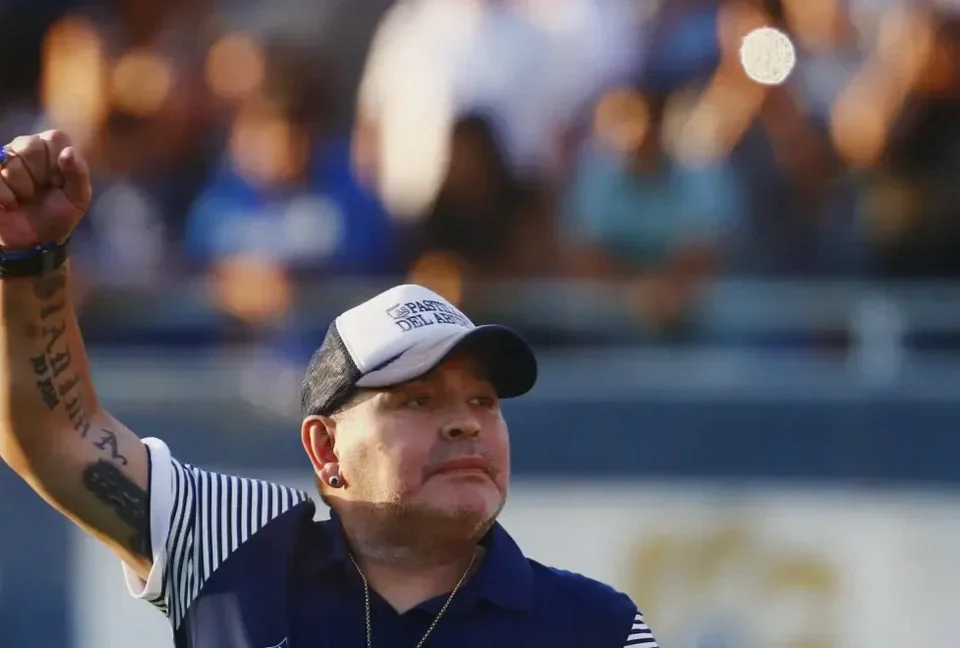
In the Buenos Aires courtroom examining the death of Diego Maradona, the case returned to the final, troubled weeks of a footballer whose name still fills stadiums far beyond Argentina. Lawyers representing his daughters Dalma and Gianinna asked judges to impose prison terms of up to 15 years on members of the medical team responsible for his care, arguing that the failures around his home treatment left Maradona isolated at a moment of acute vulnerability.
The daughters’ legal representatives delivered the fifth and last closing argument from the private prosecutors, speaking for five hours in the longest submission heard during the trial so far. Fernando Burlando described the proceedings as a defining moment, telling the court that its verdict would remain in the collective memory of Argentina and future generations.
He said Maradona, portrayed as a figure capable of repeatedly returning from adversity, had been failed in a cowardly fashion by people who exploited and worsened his fragile health. The lawyers asked for convictions for simple homicide with possible intent, seeking 15 years in prison for Maradona’s personal doctor Leopoldo Luque, 12 years for Swiss Medical home-care coordinator Nancy Forlini and 10 years for psychiatrist Agustina Cosachov. They also requested 10-year professional bans for all three.
Those proposed sentences are higher than the penalties requested by prosecutors. For nursing supervisor Mariano Perroni, the legal team sought four years in prison, while nurse Ricardo Almirón faces a request for six months. Both requests concern negligent homicide, alongside proposed nine-year bans from professional practice.
Dispute over the role of psychologist Díaz
The lawyers agreed with prosecutors and the other private complainants that clinical doctor Pedro Di Spagna should be acquitted. They broke from two of the other complainant groups, however, by asking for psychologist Carlos Díaz to be convicted of negligent homicide, with a proposed five-year jail term and a decade-long professional disqualification.
Fabián Améndola, appearing for Dalma and Gianinna, said there was no doubt in their view that Díaz bore responsibility. He argued that the psychologist exercised influence over medical decisions which proved decisive in the breakdown of the supervision system around Maradona.
Améndola pointed to Díaz’s involvement in removing therapeutic companions from the home-care plan, limiting nursing duties to the dispensing of medication and advising that family visits should not take place during Maradona’s final days. The lawyer said those measures increased the danger by reducing the flow of information and imposing distance despite existing warnings about the patient’s condition. “Diego died alone in that house,” he told the court.
The submission also returned to Luque’s part in the decision for Maradona to recover in a private house rather than a clinic after his last operation. The suitability of the property and the standard of the care arranged there have been central points of dispute throughout the hearing. Burlando said the family had been told of a serious home-hospitalisation programme, while witnesses had described something entirely different.
Messages exchanged among members of the care team were read to the judges, including one from Díaz to Cosachov referring to Maradona’s treatment. It warned that they would either lose their professional licences and go to prison or become “demigods”. Améndola answered that nobody in the courtroom was a demigod, and said the family’s representatives were asking the court to ensure the first part of that warning came true.