Roma’s European night at the Olimpico became a lesson in both promise and punishment, as a 3-1 lead against Real Madrid disappeared in the final eight minutes of a 4-3 defeat. The Giallorossi had been close to ending an eight-year wait — 2,898 days — for a Champions League victory, only for three late corners to turn an ambitious performance into a fourth defeat from four matches.
A night that began with Mourinho’s return
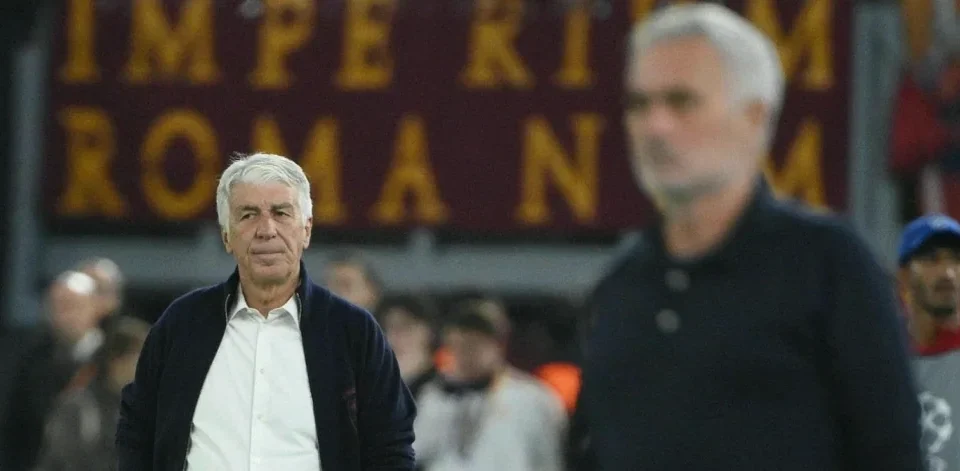
Before kick-off, José Mourinho received a powerful welcome from the Roma support. Songs, applause and banners greeted the former coach, now on the Real Madrid bench, in an evening shaped by affection before it was overtaken by the cruelty of the scoreline.
The Curva’s message to the players was “sine metu” — without fear — and Gian Piero Gasperini’s side followed it from the opening minutes. Roma pressed forward with conviction, carried the game to Real and showed the collective intensity that has become central to their season.
- In the fourth minute, Thibaut Courtois had to make an excellent save to keep out Mario Hermoso’s attempt.
- Paulo Dybala combined with Nahuel Molina eight minutes later, but could not apply the finishing touch.
- Gianluca Mancini followed Jude Bellingham closely across the pitch, underlining Roma’s aggressive approach.
- Roma took a deserved lead in the 20th minute. Dybala won possession with a sliding tackle, Matías Soulé created the opening and Marten de Roon struck while moving forward; a Konaté deflection helped take the ball beyond Courtois.
- The home side suffered an early blow when Manu Koné left the field in tears. Niccolò Pisilli came on and settled quickly.
- Roma nearly doubled the advantage in the 24th minute, when Courtois recovered after an error involving Malen and kept the ball on the line.
- Real equalised a minute later. Kylian Mbappé’s shot was diverted by Mancini, wrong-footing the Roma goalkeeper.
Roma had been the more convincing side for much of the first half, although Real grew into the contest before the interval. Marc Cucurella and Bellingham both threatened as the visitors began to find space around the edge of the area.
Roma respond after losing Dybala
The second half began with another serious setback for Gasperini. Dybala did not return after the break, leaving Roma without two important figures after Koné’s earlier exit.
Yet the response was exceptional. Mora, considered by many too slight a replacement for Dybala, helped Roma regain control. Vinicius Junior made an error and Mora released Malen, who put Roma back in front in the 51st minute. Six minutes later Soulé supplied Malen again, and the Dutch forward made it 3-1.
At that point, Roma had scored three times against one of Europe’s biggest squads and had done so through the clarity of their collective play rather than individual star power. Real, by contrast, had struggled to make its attacking names count for long spells; Vinicius endured a particularly poor evening.
Three corners, eight minutes and a reversal
Mourinho then used the depth of his bench to reshape the match. He removed defenders, sent more attacking talent into the contest and introduced Arda Güler, Endrick, Bernardo Silva and Carlos Espí. Gasperini did not have equivalent options available, turning instead to the resources left to him, including the returning Koulierakis.
- Roma held on until eight minutes before the 90th minute, despite the increasing physical strain on the side.
- Carlos Espí scored from a corner to bring Real back into the match.
- Endrick, whose arrival had also interested Roma and other Italian clubs, made a decisive impact by scoring the equaliser.
- Another corner brought the winning goal: Antonio Rüdiger got ahead of Molina to complete Real’s 4-3 comeback.
De Roon’s late struggles to compete for aerial balls summed up the final phase. Roma had defended with enormous effort, but exhaustion caught them just as Real’s substitutes and set-piece threat took control.
A defeat that does not erase the performance
The result hurts sharply. Four Champions League matches have brought four defeats, an unwanted first for Roma, and the wider record of Italian football in recent World Cups remains a reminder that the domestic game cannot ignore European standards.
But Roma’s performance against Real also offered a different conclusion. Gasperini’s team showed a recognisable identity, courage in possession, athletic commitment and an ability to compete collectively with elite opposition. With Koné and Dybala lost during the match, they still built a two-goal lead and forced Real to rely on the strength of a far deeper squad.
The immediate feeling will be of an opportunity thrown away. In time, though, Roma can take the substance of this display back into the league campaign: a side capable of playing without fear, but also one reminded that at this level, the final minutes can decide an entire chapter of a season.