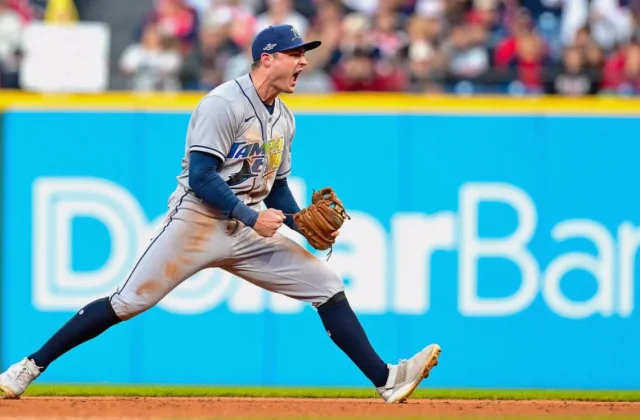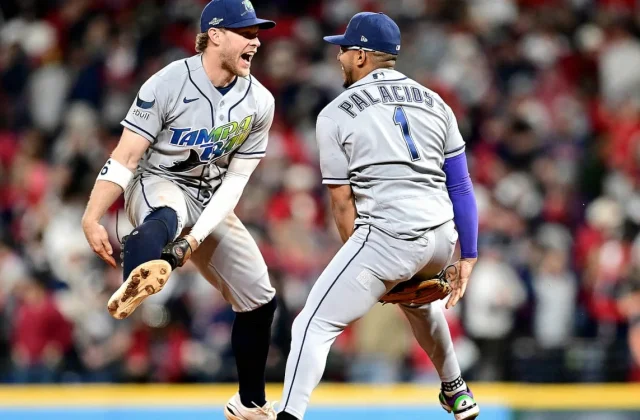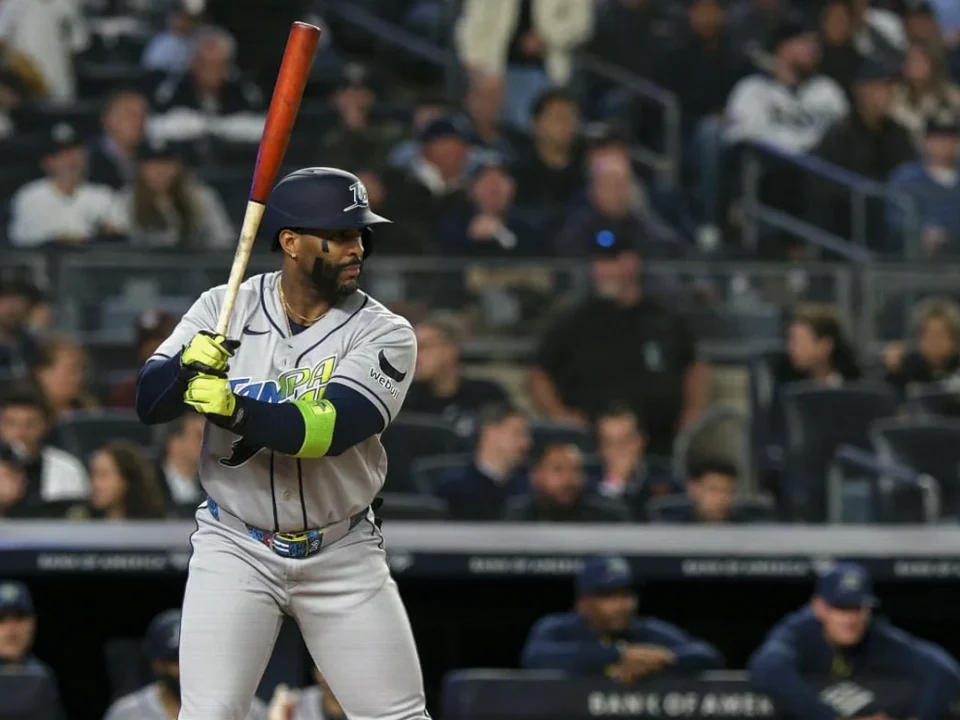
The Rays arrive in October as the American League’s 98-win standard-bearer, carrying an offense built less on the all-or-nothing swing than on the pressure of one more ball put in play. Tampa Bay opens the AL Division Series on Saturday at 6:30 p.m. ET, with Game 1 airing on TBS, truTV and HBO Max.
For a club long associated with finding the next tactical edge, this year’s twist is almost throwback baseball. The Rays struck out in only 18.8% of their plate appearances and posted a 20.7% swing-and-miss rate, both best marks in the majors.
Quick facts
- Tampa Bay won 98 games, the most in the American League.
- The Rays’ 18.8% strikeout rate and 20.7% whiff rate led MLB.
- The club improved from a 23.1% strikeout rate and 25.7% whiff rate in 2025.
- Tampa Bay went 48-2 when it hit more home runs than its opponent, the best such record in major league history.
- After hitting 111 homers in 111 games before the Trade Deadline, the Rays hit 58 in their final 51 regular-season games.
Kevin Cash, now in his 12th season in the Tampa Bay dugout, said the club believed it could become more contact-minded. Leading the sport in that department, though, exceeded even the manager’s expectations.
That is a sharp turn for a franchise that spent much of its recent success accepting swings and misses in exchange for power. From 2018 through 2023, the Rays reached the postseason five times in six seasons and owned MLB’s fourth-best winning percentage, behind only the Dodgers, Astros and Braves. Their 27.2% whiff rate over that stretch was the majors’ highest.
Even last season, Tampa Bay carried a 23.1% strikeout rate and a 25.7% whiff rate. The 2026 club shaved five percentage points off the latter number, the largest two-year decline by any team since Cleveland made a similar improvement from 2021 to 2022.
Only the 2024 Padres and 2017 Astros have recorded lower team whiff rates during the last decade. For the Rays, who had finished in the bottom half of the league in hitter strikeout rate in each of the prior 11 seasons, it is unfamiliar ground.
The roster changed the math. By the middle of January, Tampa Bay had moved on from its five biggest swing-and-miss regulars from 2025: Christopher Morel, Kameron Misner, Brandon Lowe, Josh Lowe and José Caballero. Together, that group accounted for 1,785 plate appearances last year; Caballero’s 27.4% whiff rate was the lowest among them.
Twelve Rays cleared 200 plate appearances this season, and Victor Mesa Jr. had the highest whiff rate at 25.5%. That put Mesa barely above the league average of 25.1%, leaving Tampa Bay with almost no soft spot in its contact profile.
Chandler Simpson remains a central figure in the identity shift, making contact at a rate topped by only two qualified major league hitters. But his rise alone does not explain it; he had only 141 more plate appearances than he did in 2025.
Offseason additions Cedric Mullins and Ben Williamson supplied steady contact, with Mullins posting a 22.1% whiff rate across 502 plate appearances and Williamson at 17.6% in 286 trips. Richie Palacios, limited to 17 games by injury in 2025, returned for 399 plate appearances and a 20.7% mark.
Behind the plate, Nick Fortes logged 323 plate appearances with an 18.3% whiff rate. Liam Hicks brought an even more selective bat-to-ball game, striking out on swings and misses at a 12.9% clip in 145 plate appearances after joining Tampa Bay.
Taylor Walls said the clubhouse noticed early that its roster had a different look. The shortstop called it a style that had faded around the game, but said the Rays understood those were the tools they needed to press.
The returning players joined the shift rather than resisting it. Of the five Rays who had at least 250 plate appearances in 2025 and came back this season, four reduced their whiff rates.
Junior Caminero provides the loudest version of the balance Tampa Bay wants. The 24-year-old third baseman hit 42 home runs while maintaining a 24.1% whiff rate, better than league average. Among the 22 players with at least 30 homers this season, only three missed less often on their swings.
The Rays do not simply wait for deep counts. They averaged 3.75 pitches per plate appearance, second fewest in the majors, and saw fewer pitches with two strikes than any other club. Still, their 21.0% whiff rate in two-strike situations also led the sport, evidence that the approach rests on more than early-count aggression.
Cash pointed to the cumulative burden those at-bats create, with hitters competing through trips to the plate and forcing pitchers to keep executing. The result was an offense above the league midpoint in runs per game and a 104 wRC+, better than all but four teams.
October will still ask the familiar question: Can contact withstand postseason pitching? The 2025 Blue Jays also led the majors in both strikeout avoidance and whiff avoidance, then reached Game 7 of the World Series. But power has remained decisive in the playoffs; teams that hit more home runs than their opponent went 30-5 in the 2025 postseason.
Tampa Bay knows that part of the formula. Its 48-2 record when winning the home-run battle shows how much the long ball changes its ceiling. The late-season jump in homers, helped by Mesa’s emergence and Hicks’ addition, left the lineup looking more complete than it did on Opening Day.
There is more around this club than its bats. The Rays believe their pitching gives them room to play their preferred style, while their baserunning adds another layer Toronto’s recent contact-heavy clubs did not possess.
The Rays have spent years zigging while the sport zags, whether through the opener, aggressive defensive positioning or strict workload management for starters. This October, their latest edge may be the oldest one in the book: make contact, make the defense work, and keep the line moving.