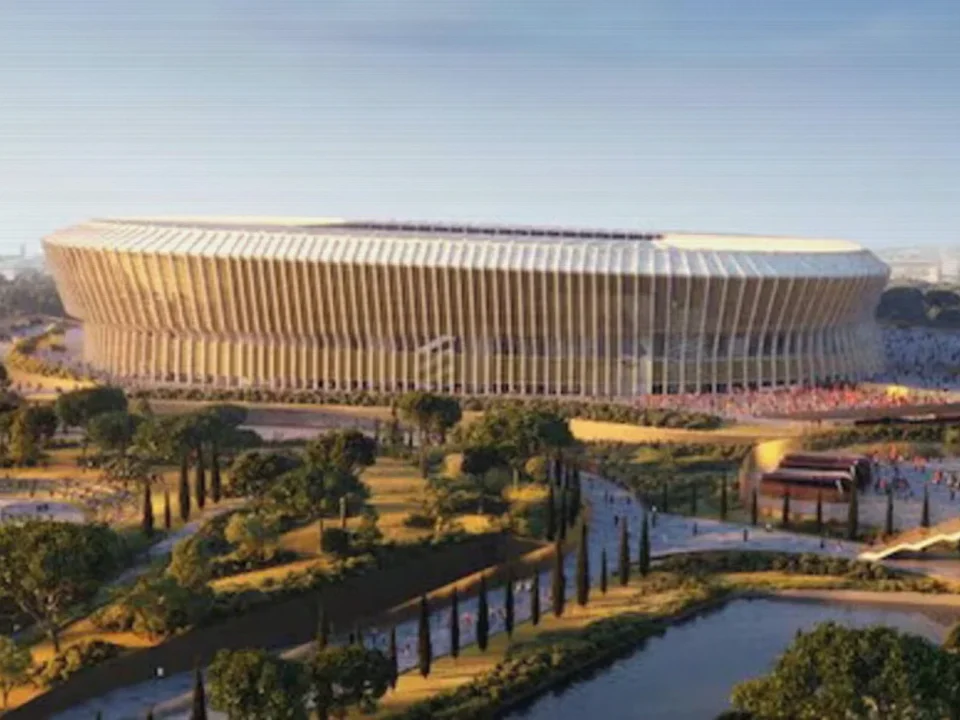
Roma’s long search for a new stadium has reached its most important administrative turning point, with the Pietralata project clearing the decisive Services Conference. For a club that has spent years trying to turn ambition beyond the pitch into permanent infrastructure, the approval moves the proposed ground from planning argument towards construction.
The decisive approval at Pietralata
The final session of the decision-making conference was chaired by Massimo Sessa, the Government’s extraordinary commissioner for Euro 2032 stadiums. It came 1,456 days after 10 October 2022, when Roma began the new process following the collapse of the previous Tor di Valle stadium plan under the club’s former ownership.
Roughly 50 institutional and technical representatives took part in the meeting. The group included the relevant ministries, the State Superintendency, Roma’s representative Lucia Bernabé, Rome mayor Roberto Gualtieri and Lazio regional president Francesco Rocca. Sports and Youth Minister Andrea Abodi also joined remotely.
The conclusion of the conference was greeted with sustained applause, reflecting the sense that the most difficult stage of the approval route had been overcome.
- The Pietralata stadium has received clearance through the decisive Services Conference.
- The project is intended to provide Roma with a modern and sustainable permanent home.
- The wider development is expected to support regeneration in the surrounding district and create longer-term benefits for the city.
- Roma also hopes the venue can enter the framework for Euro 2032 host stadiums.
Roma see a club project with a civic role
Roma described the decision as a historic and fundamental milestone, crediting years of work and cooperation under the Friedkin family. The club said its future must be built through substantial, ambitious projects and stressed that the stadium should be shared as a goal with the public bodies and institutions involved in bringing it forward.
The club’s view is that the ground will be more than a replacement match venue: it is planned as a home for supporters and as an asset for Rome, capable of opening opportunities, assisting local redevelopment and contributing to the city’s development.
For Roma, the commercial importance is equally clear. A new stadium would offer the prospect of increased revenues and a stronger international profile, potentially giving the club greater room to compete over the longer term.
Abodi linked the progress to the appointment of a commissioner by the Meloni government, saying that the decision had accelerated bureaucracy and enabled Giallorossi supporters to envisage a stadium of their own.
The work still required before construction
Approval does not mean that building can begin immediately. Roma must now complete the executive design, incorporating the conditions and requirements set out in the conference’s final report. That work has already started and is expected to take around three months.
At the same time, the club must lodge with the Ministry of Economy and Finance the sums required for expropriation of privately owned land. When the final design is validated, municipal offices will have an estimated 20 to 30 days to check that every prescription has been fulfilled.
- Roma completes the executive project and includes all conference requirements.
- The necessary funds for private-land expropriations are deposited with the Ministry of Economy and Finance.
- Rome’s municipal departments verify compliance after the project is validated.
- The municipality launches a call for interest for a 90-year concession of the area, expected around the beginning of February.
- As the proposing party, Roma would have the right to match any offer submitted by another bidder.
- The target is to make the site ready for construction by the end of March 2027, allowing a possible groundbreaking that month or shortly afterwards.
The hoped-for timetable would put Roma’s first match at the new stadium between 2029 and 2030. There remain technical, financial and procedural steps ahead, but Pietralata has now moved beyond the status of an idea. For Roma and the city, the next chapter is about turning clearance into a building site.