October will ask Serie A’s leading clubs to show the depth of their squads as much as the quality of their first elevens. The league resumes on 10 October after the international break, and five rounds will be played across the following 20 days: four weekend programmes and a midweek round running from 27 to 29 October. European commitments will make the rhythm still harsher, with the Milan derby on 31 October serving as the month’s final, defining evening.
For Inter, the schedule appears favourable on paper before that appointment with Milan. Between 10 and 28 October, Cristian Chivu’s side will meet opponents currently placed 15th or lower in the table, while two Champions League fixtures will be staged at San Siro rather than on difficult continental trips. Parma come first in the league, followed by Bologna, Fiorentina and Venezia, while Club Brugge arrive in Milan on Tuesday 13 October and Shakhtar Donetsk visit on Wednesday 21. Brugge’s trip carries an added connection with former Inter goalkeeper Yann Sommer. Reduced travel may offer Chivu a small advantage, but the value of that comfort will depend on whether Inter turn a seemingly manageable run into points before derby night.
Milan will reach the derby after an even more unsettled itinerary. Ruben Amorim’s team have seven matches in 20 days, four of the first five away from San Siro, and two Europa League ties that leave little margin after an opening defeat to Benfica. The Rossoneri restart at Sassuolo on 11 October, the same ground where Massimiliano Allegri’s Milan were beaten last season. They then travel to Salzburg on 15 October before receiving Atalanta, who have won on each of their last two visits to Milan. Bournemouth away follows on 22 October, then Udinese away on the 25th and Bologna at home in the midweek round on the 28th.
The convincing victory over Lecce eased the immediate pressure on Amorim, but October will provide a more reliable measure of his Milan. There are also two further fixtures in November before the next international pause, meaning that the derby will not settle everything, although it may reveal whether the team have found a steadier direction.
Rotation becomes the October test
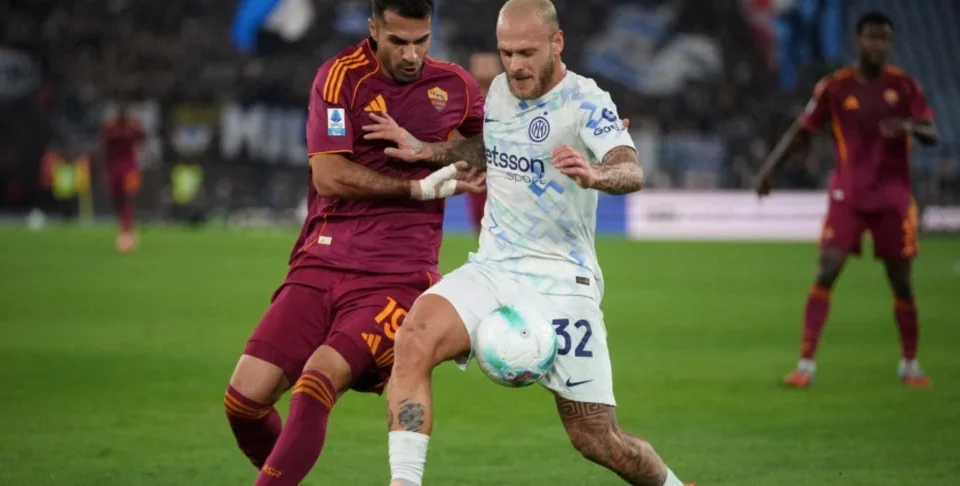
Gian Piero Gasperini has long spoken of the need for two players in every position, and Roma’s upcoming programme gives that principle its clearest examination. The Giallorossi face seven matches in 20 days, rising to nine in 28 if the period is extended to 7 November. They return at Como before meeting Real Madrid in the Champions League three days later, a sequence that will require contributions from players who have so far carried fewer minutes.
Mora, Castro, De Roon, Molina and Koulierakis are among those expected to be used. Lorenzo Pellegrini is due back at Como and can offer Gasperini another senior attacking option, particularly through his shooting from distance. Wesley, less influential than usual against Inter, needs to regain sharpness, while Dutch striker Malen is aiming to recover from the knee issue suffered in that same match. As Serie A’s current leading scorer, his return would bring obvious weight to Roma’s search for goals.
Como, meanwhile, enter their most demanding stretch with 15 members of the squad away on international duty. Only part of Cesc Fabregas’ group will be able to rest properly before Roma arrive at the Sinigaglia on Sunday 11 October for the 12.30 kick-off, the standout fixture of the sixth round. A home win over Gasperini’s Roma in the second half of last season helped lift Como towards the higher places, where they remained until the end of the campaign. This time, the meeting may again indicate the scale of the club’s ambitions.
Fabregas then takes Como into new territory: their first European away match, at Feyenoord in Rotterdam, followed by an away league game against Fiorentina and a Champions League meeting with Manchester United at the Sinigaglia. The final three matches of the run, the last of them scheduled for Sunday 1 November, appear more accessible. Even so, seven games in 21 days will force a different training plan and careful management between those playing regularly and those waiting for their chance. It is the kind of workload that tests whether an ambitious side can operate like an established one.
Juventus will spend much of the same period on the road. Luciano Spalletti’s side play seven times in 20 days, with four of those matches away from the Allianz Stadium. Their sole home defeat so far came in the 3-2 loss at Sassuolo in Reggio Emilia, and the next sequence includes trips to Cagliari, Vigo, Lecce and Genoa. The journey to Genoa is the only nearby one, while the other three are expected to involve air travel.
The Bianconeri begin in Sardinia on 11 October, then face Celta Vigo in Spain on the 15th. Lazio visit Turin on the 18th and Rennes on the 22nd, before Juventus go to Lecce on the 25th and Genoa on the 28th. Napoli, coached by former Juventus manager Allegri, arrive on 1 November. Spalletti will have Andrea Cambiaso available again for Cagliari and may also welcome back Juan Cabal, but he must navigate the run without four players recently operated on. Kenan Yildiz hopes to return between late November and December, while Thuram, Locatelli and goalkeeper Grabara, who underwent ligament surgery, are not expected back until 2027. Ekhator and Boga will need more time as well.
Napoli approach their own seven-match stretch across 22 days under a different sort of pressure. Allegri has demanded a response after a forceful dressing-room intervention in Florence, placing responsibility especially on the senior players. His concern is not only concentration but also the lack of goals, without which Napoli cannot redirect their season.
The calendar offers little shelter: Frosinone, Roma, European fixtures away to Villarreal and at home to Bodo, and then the trip to Juventus at the Allianz Stadium. The meeting with Spalletti’s side carries particular significance for both coaches. The break may have arrived at a useful moment for Napoli, with Scott McTominay set to return to training while awaiting sporting clearance. Allegri will also hope for more from Neres, who was outstanding in the last Supercoppa, but the wider demand is for the squad to demonstrate the personality and hunger their manager believes it possesses.
By Halloween, the table may have changed shape several times. October’s packed schedule will not decide the championship, but it will expose the sides equipped to keep their course when the weeks stop allowing anyone to pause.