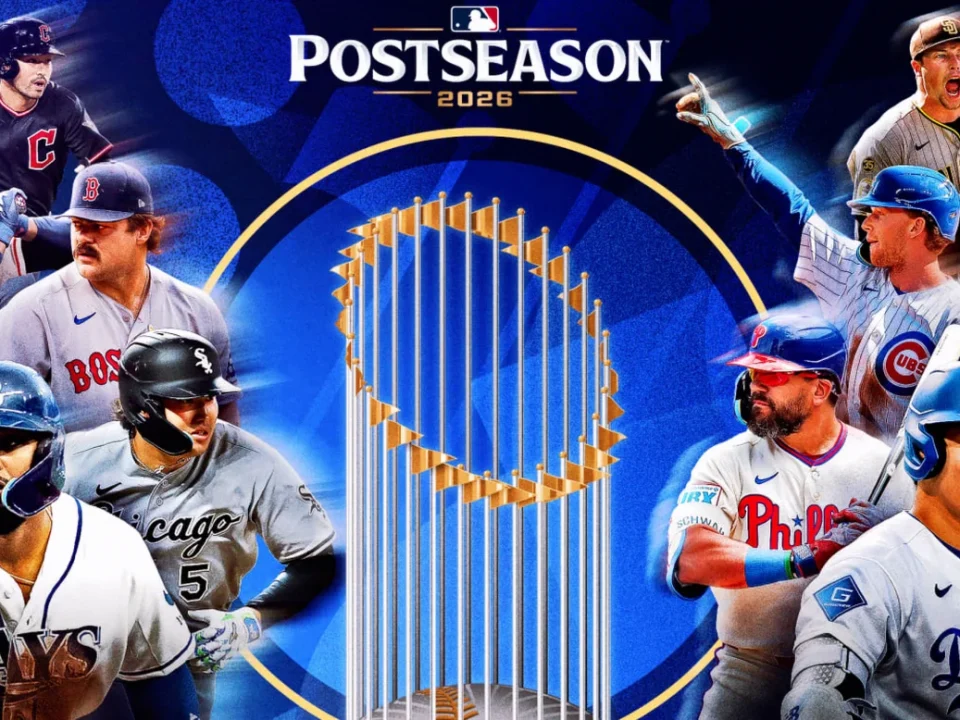
October starts with a clean slate: all 12 clubs are back at 0-0, and the regular season has done its sorting. The Dodgers enter as the defending champions after winning a second straight World Series in 2025, something no franchise had accomplished since the Yankees’ 1998-2000 run. But the postseason has room for a surprise; 16 different clubs have won it all since 2000.
Postseason snapshot
| Club | October edge | Key number |
|---|---|---|
| Tampa Bay Rays | Balanced roster and home field | AL’s best regular-season club |
| Cleveland Guardians | Pitching with a deeper lineup | 232 runs after the Deadline |
| Houston Astros | Yordan Alvarez in the middle | .294/.393/.551 in 60 postseason games |
| New York Yankees | Front-line rotation | Cam Schlittler: 1.95 ERA in 33 starts |
| Boston Red Sox | Defense and bullpen depth | Three Gold Glove-caliber defenders |
| Chicago White Sox | Young power and belief | Three hitters with 30-plus homers |
| Milwaukee Brewers | Pitching, defense and 100-plus wins | First 100-win season in club history |
| Los Angeles Dodgers | Deep October pitching | Four elite rotation options |
| Atlanta Braves | Relief corps built for short games | Four late-inning weapons |
| San Diego Padres | Baseball’s top bullpen | Starters may need only 2-3 innings |
| Chicago Cubs | Historic defense and Pete Crow-Armstrong | +72 FRV, +74 OAA |
| Philadelphia Phillies | Five-man starting-pitching group | Reached playoffs on final day |
Tampa Bay has the complete October tool kit
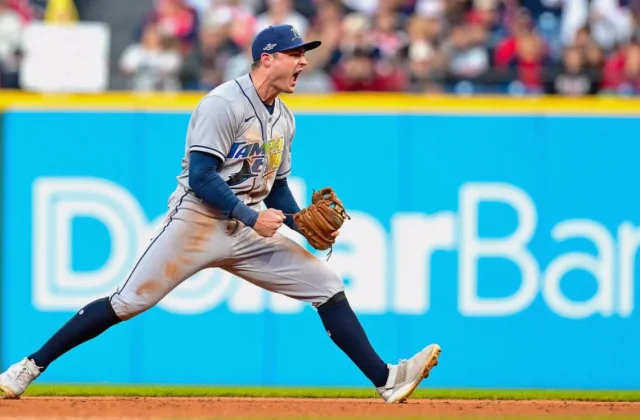
The Rays were projected by many to finish at the bottom of their division, then spent the year looking like the American League’s strongest club. Tropicana Field now gives them a meaningful edge in the ALDS and potentially the ALCS. Junior Caminero, Yandy Díaz and Jonathan Aranda bring impact to the lineup, while Drew Rasmussen, Freddy Peralta and Nick Martinez give Tampa Bay credible starting options. Bryan Baker heads a bullpen that fits the club’s usual formula: deep, flexible and difficult to rattle.
Tampa Bay can change a game with power or manufacture a run with contact and speed. Just as important in October, the Rays have avoided the self-inflicted plays that can turn a tight series upside down.
Cleveland has more support around its pitching
The Guardians remain built around arms. Parker Messick and Gavin Williams lead the rotation, and All-Star closer Cade Smith handles the ninth-inning pressure. This version of Cleveland, though, is not asking José Ramírez to carry every offensive burden, particularly after an injury-affected season for the third baseman.
Rookies Chase DeLauter and Travis Bazzana have helped fill out the lineup alongside Angel Martínez and Brayan Rocchio. Trade Deadline additions Jo Adell and Nathaniel Lowe added more length, while Steven Kwan found his stride in the second half. Cleveland ranked eighth in the Majors with 232 runs after the Deadline and was tied for eighth with a .731 OPS. If the Guardians pitch as expected, that extra offense gives them a more October-ready look.
Houston rides the game’s premier hitter
The Astros’ path runs through Yordan Alvarez. His regular season put him atop the American League in batting average, on-base percentage, slugging percentage, walks, extra-base hits and total bases, placing him in position for his first AL MVP Award.
Alvarez has already shown he can own the moment. Across 60 postseason games, he has posted a .294/.393/.551 line with 12 home runs, and Houston is 8-2 in playoff games when he goes deep. The Astros will need that left-handed thunder again if they are going to stay alive deep into October.
The Yankees can send out frontline starters
New York’s case begins on the mound. Cam Schlittler completed a Cy Young-caliber season with a 1.95 ERA across 33 starts and also delivered a 12-strikeout postseason performance that eliminated Boston last year. Max Fried, Gerrit Cole and Carlos Rodón round out a rotation that has been baseball’s best at keeping runs off the board.
Aaron Judge’s status remains uncertain, but the Yankees still have power. Ben Rice hit a career-best 41 home runs and should draw MVP consideration. Cody Bellinger and Luis Garcia Jr. can change a scoreboard quickly, while rookies George Lombard Jr. and Spencer Jones have supplied enough promise to make a first October moment feel possible.
Boston’s gloves travel
Pitching and defense have been Boston’s calling card all season. Sonny Gray and Ranger Suárez bring postseason experience to the rotation, while rookie left-hander Payton Tolle supplies both electric stuff and a large personality. Aroldis Chapman closes games, Garrett Whitlock has been a key setup arm, and Brayan Bello can work in virtually any relief role or return to the rotation if needed.
The defense has real range behind them. Caleb Durbin at third base, center fielder Ceddanne Rafaela and right fielder Wilyer Abreu all have Gold Glove potential. The offensive assignment is straightforward: provide enough timely scoring, especially with runners in scoring position, and let the pitching and defense take over.
The White Sox are not interested in old expectations
Chicago came into 2026 after three consecutive 100-loss seasons, with .500 viewed as a worthy target by plenty of observers. Instead, the White Sox clinched a playoff berth in Kansas City on Sept. 24 and brought a fearless young club into the tournament.
Miguel Vargas, Munetaka Murakami and Colson Montgomery each cleared 30 homers during the regular season. If the rotation can hand leads to a high-end bullpen, the White Sox have enough power and enough energy to make opponents uncomfortable. They have played every one of their 27 outs with urgency, and outside doubt has not altered that identity.
Milwaukee has been here before, but looks better prepared
The Brewers traded ace Freddy Peralta, won the NL Central anyway and pushed past 100 wins for the first time in franchise history. That is familiar Milwaukee resilience. What may be different this fall is the growth of the club’s young position-player core and a pitching staff in much better shape for postseason work.
Brice Turang has developed into an all-around force at second base. Jacob Misiorowski, who was struggling enough last October that his NLDS roster spot was uncertain and he worked in relief, has emerged as the likely NL Cy Young Award winner and a true Game 1-caliber starter. Milwaukee may not win through a steady stream of home runs, but its pitching and defense can stand alongside anyone’s.
The Dodgers have another loaded pitching plan
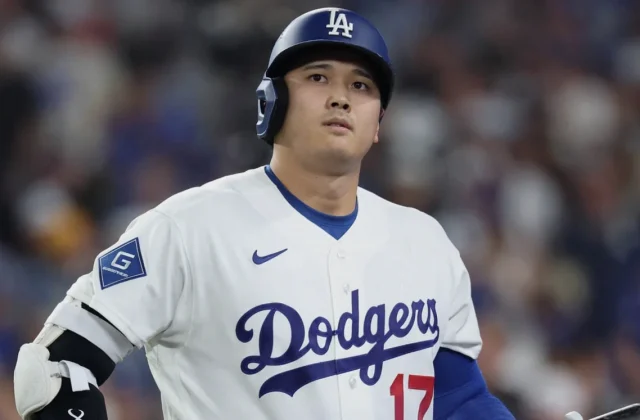
Los Angeles won last year with a postseason rotation that overwhelmed opponents, and the club has another formidable group. Shohei Ohtani will hit only this October, but two-time Cy Young Award winner Tarik Skubal has joined Yoshinobu Yamamoto, Blake Snell and Tyler Glasnow in a four-deep rotation.
The bullpen also appears far stronger than it did a year ago. Tanner Scott and Roki Sasaki are among the late-game options, with Edwin Díaz potentially returning to top form as another closing choice. With that kind of pitching, an offense led by Ohtani, Mookie Betts and Freddie Freeman need only provide its usual support for the Dodgers to threaten a third straight championship.
Atlanta will ask its bullpen to cover the distance
Injuries have battered the Braves’ rotation, leaving Chris Sale and Tyler Mahle as the primary conventional starters for the postseason. That has pushed Atlanta toward a different formula, one that could include openers and aggressive bullpen deployment from the first few innings.
Robert Suarez’s return has strengthened the group considerably. He joins Raisel Iglesias, Didier Fuentes and Dylan Lee in a relief unit with four premium options. Atlanta’s October workload may be unusual, but the club has enough quality arms to make a short game feel even shorter.
San Diego wants the lead, then the bullpen takes over
The Padres have the game’s best bullpen, and that changes the arithmetic once they score early. Mason Miller and Adrian Morejon have again been dominant at the back end, while Jason Adam is healthy and Yuki Matsui and Bradgley Rodriguez have produced excellent seasons.
San Diego may need just two or three effective innings from a starter before turning the game over to its relief corps. The offense helps the plan work: after ranking among the Majors’ weakest attacks in the first half, the Padres became one of the best offensive clubs after the All-Star break.
Chicago’s North Side has defense on a historic scale
The Cubs have turned defense into a centerpiece rather than a supporting detail. Their +72 Fielding Run Value and +74 Outs Above Average are the highest single-season totals in those Statcast measures since the data began in 2016. Pete Crow-Armstrong is the anchor in center field, surrounded by defenders capable of making Gold Glove-level plays.
Crow-Armstrong has also driven the offense with an MVP-caliber season. He became the seventh player in MLB history to record at least 40 home runs and 40 stolen bases. Chicago’s pitching has been uneven, but its lineup and glove work give the Cubs two dependable ways to control a series.
Philadelphia still has starters nobody wants to see
The Phillies limped into the playoffs, clinching only on the final day of the regular season after a rough final week. Once the bracket begins, however, the club’s rotation can reset the conversation.
Cristopher Sánchez, Jesús Luzardo, Zack Wheeler, Aaron Nola and Andrew Painter give Philadelphia a formidable collection of starters. Wheeler had been lined up for Game 1 of the NL Wild Card Series before the Phillies needed him to pitch Sunday. The road may have become more complicated, but the basic October truth remains: if those starters keep putting up zeros, Philadelphia has a chance against anyone.