The 2026-27 forward pool is built around movement, opportunity and a fresh set of frontcourt roles. Giannis Antetokounmpo, Jaylen Brown, LeBron James and Kawhi Leonard have all changed teams, while top rookies AJ Dybantsa, Cameron Boozer, Caleb Wilson and Yaxel Lendeborg enter a league where wings are expected to rebound, create, switch and stretch the floor. For fantasy managers, the position offers both early-round stars and rotation players whose new minutes could matter quickly.
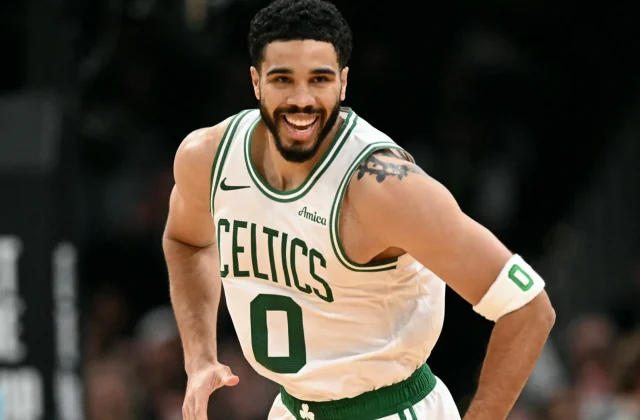
The safest early investments remain the forwards who can fill multiple columns. Antetokounmpo, James and Leonard have long set that standard, and Jalen Johnson, Paolo Banchero, Jayson Tatum and Cooper Flagg now belong in that wider group. The best forwards can keep pace with top guards as scorers and playmakers while adding an edge on the glass and at the rim. That combination makes the position especially valuable near the top of drafts.
Team context should be part of the evaluation. Rebounds begin with missed shots, and productive defensive teams tend to create more of them. Of the 15 leading rebounders in the 2025-26 regular season, only Jalen Johnson and Donovan Clingan played for clubs outside the league’s top half in opponent field-goal percentage. Even Atlanta and Portland ranked within the top 20, while 10 of the 15 rebound leaders came from top-10 defenses.
There is another side to the equation: pace. Fast teams create more possessions, more transition chances and, simply, more shots for both sides. Athletic forwards can turn that volume into extra scoring, while the additional attempts can raise opportunities on both offensive and defensive rebounds. The ideal profile is a forward playing big minutes in a sound defensive structure that still pushes the ball.
Playmaking around a forward remains just as important. LeBron James and Jaylen Brown are positioned to benefit from Tyrese Maxey’s distribution, while a healthy Kyrie Irving could unlock another level for Flagg in Dallas. Anthony Davis now has Trae Young delivering the ball in Washington, and Antetokounmpo joins Davion Mitchell in Milwaukee. Floor spacing is the other useful separator. Six of the eight highest-scoring forward-eligible players in 2025-26 shot at least 35 percent from three, including four at 37.9 percent or better. In a close decision between similarly ranked players such as Zion Williamson and Brandon Ingram, Ingram’s perimeter range would normally carry weight, setting aside his Achilles injury.
New roles could push the breakout group
Dybantsa arrives in Washington as the No. 1 pick in the 2026 draft and should be handed a major runway immediately. The Wizards have a high-tempo look with Young and Davis joining young pieces Kyshawn George and Alex Sarr. That supporting cast should prevent defenses from loading up exclusively on the former BYU forward, leaving him chances to operate in favorable matchups. His all-around game, paired with an expected surplus of possessions, gives him a path to immediate production.
Boozer enters a different setup in Memphis. The former Duke standout may not have Dybantsa’s veteran support around the starting group, but that could put more of the nightly workload in his hands. Ty Jerome gives Memphis an underrated distributor, and Boozer will work beside 7-foot-3 Zach Edey in the frontcourt. Boozer shot 55.6 percent overall and 39.1 percent from deep during his lone college season. If that efficiency travels, the rookie has a chance to post full lines from the outset.
Flagg’s rookie year already carried breakout elements, but his second season could bring an even larger jump. He played 70 games at 33.5 minutes a night in 2025-26, learning through an uneven opening stretch before his production surged. Across his first 19 regular-season appearances, he averaged 15.7 points, 6.5 rebounds, 3.5 assists and 1.4 steals. Over the following 51 games, those numbers rose to 23.0 points, 6.7 rebounds, 4.9 assists, 1.1 steals and 1.0 block.
Dallas saw that growth without Irving, who is now fully recovered from the ACL tear he suffered two seasons ago. Irving’s return should ease the creation burden on Flagg and provide more opportunities for the young forward to attack single coverage. A second-year leap into the league’s top tier is firmly in play if the minutes and on-ball responsibility remain intact.
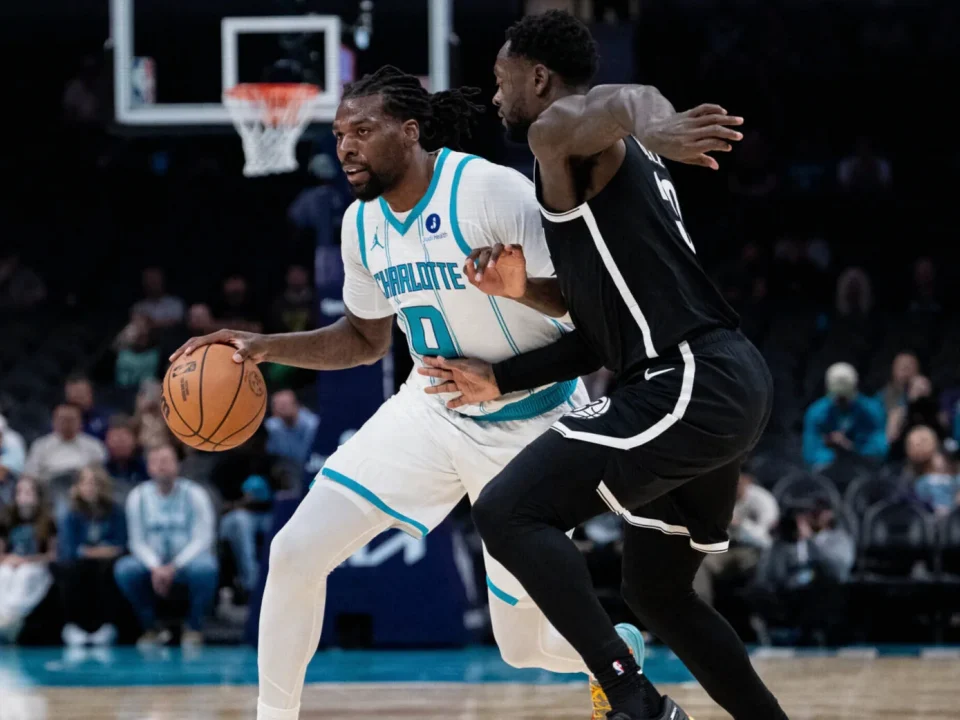
Naz Reid is set for a different kind of test in Charlotte, where the 27-year-old is projected to move from a long-running second-unit role into a starting frontcourt job in his eighth season. Miles Bridges, now gone, averaged 18.7 points, 6.7 rebounds and 3.5 assists in 31.4 minutes while starting at power forward for the Hornets over the past two years. Reid has a case as the better three-point shooter and comparable rebounder, and unlike Bridges he will not be competing with LaMelo Ball for touches. The question is how he handles a regular starter’s load, although his spot starts in Minnesota showed he can manage larger assignments.
Rui Hachimura also lands in a window of opportunity with the Clippers. He changed Los Angeles teams in the offseason, joining a roster that moved Leonard and will begin the season without Brandon Ingram, a major piece of that deal. Darius Garland will handle plenty of the scoring, but Bradley Beal may not be ready for opening night and rookie Keaton Wagler could need time to find his footing. Hachimura has been a dependable floor spacer rather than a high-volume fantasy option in previous starting stints. Early usage, however, could be larger than usual.
Second-unit names with a path to more
Jaime Jaquez Jr. heads to Milwaukee in the Antetokounmpo trade and should be a central piece of the Bucks’ rebuild. The fourth-year forward comes off his most productive Miami season, averaging 15.4 points, 5.0 rebounds and 4.7 assists in 28.3 minutes while shooting a career-best 50.7 percent in 2025-26. He started only once last season, but he had 17 starts in 2024-25. With Antetokounmpo and Bobby Portis no longer on the roster, Jaquez has a clearer route to starter-level minutes and usage. He will also be reunited with former Heat teammate Tyler Herro.
Matas Buzelis may be past the traditional sleeper label after his second-year jump in Chicago. The 2024 No. 11 overall pick produced 16.3 points, 5.8 rebounds, 2.1 assists and 1.5 blocks in 29.2 minutes last season, shooting 46.3 percent and averaging 15.6 combined field-goal and free-throw attempts. He turns 22 one week before the regular season opens. Norman Powell and rookie Caleb Wilson are new additions, but Buzelis’ growing comfort and versatility should keep him in the middle of Chicago’s plans.
Detroit is not expected to open with Ronald Holland II in the first five, with veteran addition John Collins ahead of him, but Holland has room for a larger third-year role. He averaged 8.2 points, 4.0 rebounds, 1.2 assists and 1.2 steals in 19.9 minutes during 2025-26, improving in most major categories. His field-goal rate fell from 47.4 percent as a rookie to 43.2 percent last year, making efficiency the obvious next step. On a talented Pistons roster, a stronger finish around the rim could turn a bench role into a more meaningful nightly rotation spot.
Collin Murray-Boyles made an efficient first impression in Toronto, posting 8.5 points, 5.0 rebounds and 1.9 assists in 21.9 minutes while shooting 57.9 percent. The former South Carolina forward started 22 games, reached double figures 30 times and recorded four double-doubles. He is projected to back up Scottie Barnes at power forward and Jakob Poeltl at center, a dual-role assignment that should secure a substantial second-unit workload. Toronto exchanged Ingram for Leonard in the offseason, but Murray-Boyles’ place in the rotation remains promising after a year of NBA experience.
Ayo Dosunmu is another reserve who should have the ball often enough to matter. Minnesota added LaMelo Ball and Jonathan Kuminga, and Dosunmu is not projected to begin the campaign with the starters. Still, his work after arriving from Chicago showed the value of his versatility. In 34 regular-season and playoff games for the Timberwolves, he averaged 14.7 points, 4.0 rebounds, 3.7 assists and 1.0 steal in 28.9 minutes. Whether he is covering either guard position or sliding to small forward, Dosunmu has already shown he can provide production without a formal starting designation.