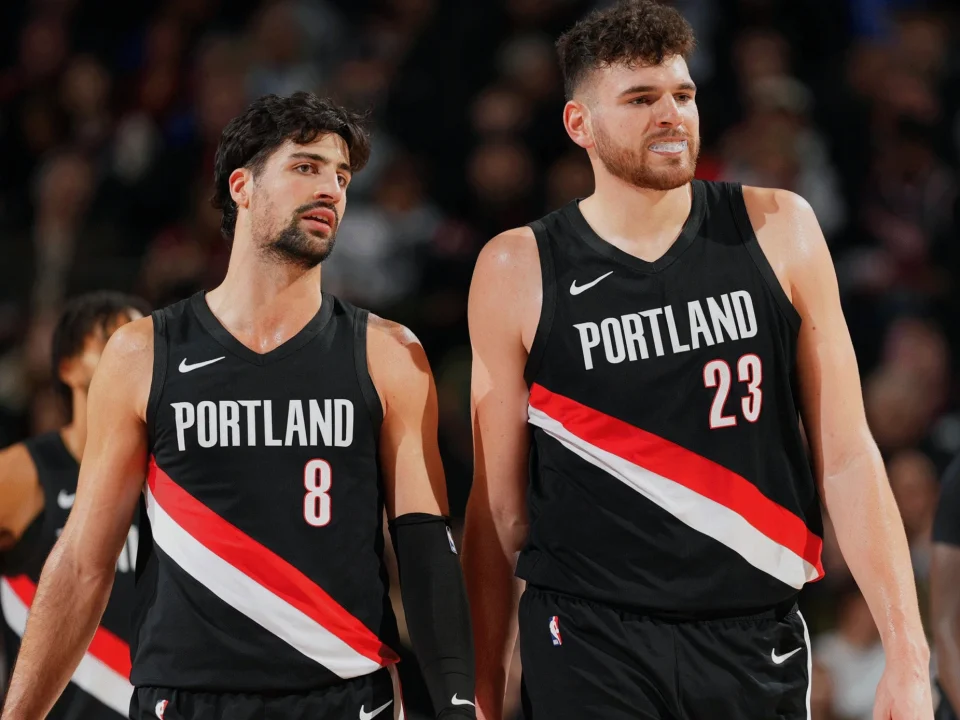
Portland broke a four-year postseason drought last spring, finished 42-40 and climbed to eighth in the Western Conference, but the next version of the Trail Blazers arrives with a crowded guard room, a new voice on the sideline and little margin for error in a deeper West. Micah Nori becomes the club’s third head coach in less than a year, taking over after Chauncey Billups and Tiago Splitter, with Damian Lillard and Ja Morant set to reshape how the offense operates.
A new coach inherits an overloaded backcourt
Nori gets his first full lead job after working as an NBA assistant since 2009, most recently on Chris Finch’s Minnesota staff. He brings an offensive-minded reputation to Portland, but his larger task may be arranging minutes, touches and defensive cover around a group of guards with very different timelines.
- Lillard is back in Portland after missing the entire previous season while recovering from a torn Achilles. If he is cleared for opening night, he will have gone 542 days between games.
- Morant joins the Blazers needing a reset after an up-and-down seven-year run in Memphis. Portland will be asking for the burst and playmaking that once made him one of the league’s most dynamic guards.
- Shaedon Sharpe tore his meniscus during an August workout and could miss most, if not all, of the season.
- Jrue Holiday is now 36, while Scoot Henderson could spend a significant portion of his floor time away from the traditional point guard spot.
- Branden Carlson, Micah Potter and Jeremy Sochan were also added during the offseason.
The central question for Nori is not merely finding a starting five. It is identifying combinations that can keep Lillard and Morant productive without exposing the group on the other end. If he can get useful mileage from Lillard, restore Morant’s impact, manage Avdija’s adjustment and steer Portland back to the playoffs, his first season in the chair will qualify as a breakout of its own.
Avdija, Clingan and Camara provide the returning foundation
Deni Avdija carried a major share of Portland’s offense last season. The 6-foot-8 forward frequently initiated possessions, lifted his scoring average from 16.9 points to 24.2 and finished third in Most Improved Player voting. His opportunity level, though, is likely to change now that Lillard and Morant need the ball.
Avdija’s usage rate jumped to 28.5 last season after sitting at 16.8 across his four seasons in Washington. Portland will need him to remain an aggressive connector while accepting fewer of the high-volume looks that fueled his best year.
- Donovan Clingan led the NBA with 4.5 offensive rebounds per game.
- Clingan also ranked among the league’s top five in second-chance points, total rebounding average and blocked shots.
- Robert Williams III posted a 13.3% offensive rebounding percentage, while Clingan’s 14.9% mark ranked second among 305 players who averaged at least 15 minutes in 40 or more games.
- Toumani Camara drew 106 offensive fouls, leading the league and posting the highest total recorded since the statistic began being tracked 21 years ago.
Those frontcourt habits supplied a real identity. Portland averaged 18.4 second-chance points per game, the second-highest figure by any team in the 30 seasons in which the category has been recorded. The Blazers were able to stay afloat offensively by extending possessions and punishing teams after missed shots.
More creation is needed beyond the extra possessions
Portland’s offense still finished 21st overall. The Blazers were a bottom-10 shooting club and gave the ball away a league-worst 16.9 times per 100 possessions. Their initial offense ranked 28th, ahead of only Brooklyn and Washington, making the offensive boards more of a survival mechanism than a luxury.
Lillard and Morant should offer a major upgrade in first-action creation, especially when the Blazers need a clean pick-and-roll possession or a late-clock answer. But the gains will have to be meaningful: Portland reached the playoffs last season after getting above .500, and the 2026-27 Western Conference projects to demand more than another 42-win push.
Dates that will test Portland’s new look
- Nov. 10 vs. Oklahoma City: The Thunder visit Moda Center for the first of consecutive games between the teams. San Antonio arrives a few days earlier, and those home dates sit around a difficult opening stretch in which Portland plays 12 of its first 17 games on the road.
- Nov. 16 at Minnesota: Nori returns to Target Center as a head coach when Portland faces the Timberwolves on back-to-back nights. He helped Finch’s staff build Minnesota into a Western Conference contender.
- Nov. 19 at Milwaukee: Lillard faces the Bucks, his former club, in a return to Milwaukee after a tenure that began with championship ambitions but was disrupted by injuries and salary-cap complications.
- Feb. 6 at Memphis: Morant is scheduled to make his first return to Memphis with the Blazers after spending his first seven NBA seasons with the Grizzlies.
- March 19 vs. Golden State: Portland and the Warriors meet for the fourth and final time in the regular season. The Blazers finished above Golden State in the 2025-26 standings, the only time they had done so in the previous 12 years.
The roster has enough ballhandling to change Portland’s ceiling and enough defensive rebounding to keep manufacturing possessions. Nori’s first assignment is turning those ingredients into a rotation that works before the early road-heavy schedule forces the issue.