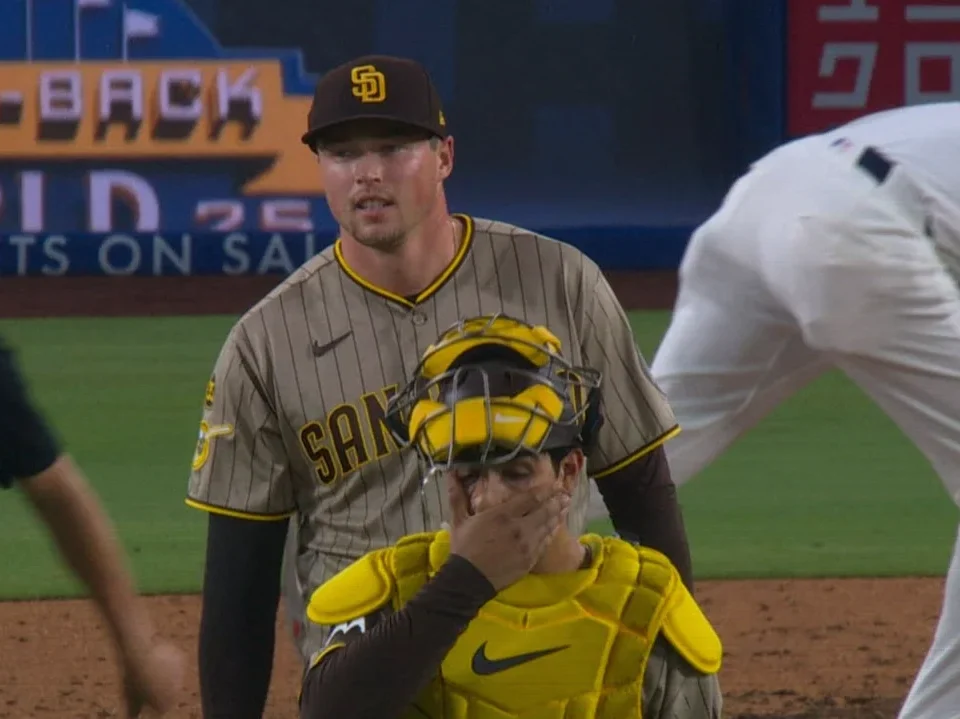
The Padres punched another October ticket Friday night, beating the Dodgers 4-2 at Dodger Stadium to secure a postseason berth for the fifth time in seven seasons. For a franchise that reached the playoffs only five times across its first 50 years, this has become a different kind of September.
San Diego will head into a third consecutive postseason for the first time in club history, carrying a bullpen built for late-inning pressure and a rotation that finally looks healthier than it has for much of the summer. The Wild Card Series opponent and site remain unsettled, but the Padres have given themselves a chance to chase the one prize still missing from the franchise case: a World Series championship.
A season that nearly came apart
-
By mid-June, the Padres owned baseball’s poorest offense, sitting near the bottom of the major categories. Fernando Tatis Jr. was still waiting for his first home run, Manny Machado and Jackson Merrill were having trouble finding consistency, and the club had not yet settled on Ty France’s role at the plate.
-
July brought a deeper problem. An eight-game skid, their longest losing streak in 13 years, exposed a pitching staff that was running short on stable options. By late July, San Diego was three games under .500 and stood 11th in the National League.
-
With the Trade Deadline 10 days away, the Padres improvised. Michael King and Walker Buehler stayed in conventional starting roles, while the other rotation spots became matchup-driven assignments. Mason Miller was reserved for the ninth inning, and the rest of the staff was deployed based on availability and opponent.
-
The approach became known as “pitching chaos,” and it delivered when the club needed it most. San Diego won eight of nine games spanning late July and early August, putting the front office in position to add rather than subtract.
-
General manager A.J. Preller then dealt three of the organization’s top nine prospects to acquire Robbie Ray and Casey Mize. The club had not been close to moving Miller, but continued losing could have put major contributors such as King, Adrian Morejon and France on the market.
-
The offense eventually caught the pitching support. Tatis, who did not homer until May 30, has reached 25 homers. Merrill has hit 26, while Machado has 29. France has produced at a level that would place him among prominent rate-stat leaders if he had enough plate appearances to qualify.
-
Additions including Samad Taylor, Luis Rengifo, Dustin Harris and Jase Bowen helped keep the lineup moving. In September, the Padres have been baseball’s top offense, a sharp contrast to their June struggles.
The deadline that changed the room
The Padres knew exactly what was at stake when their season dipped in July. France said the players understood they had to win if they wanted to give Preller the room to make his usual deadline push.
“It’s a strange position,” France said at the time. “If we want to reach our goals and allow the front office to do what A.J. normally does, we have to win games. We weren’t doing that.”
Jake Cronenworth described that pivotal nine-game stretch in simpler terms: “It was do or die.”
Preller did not soften the club’s intention after making the Ray and Mize deals. “We’re not apologizing for it,” he said. “We’re trying to win championships. We’re trying to make the postseason and keep doing it year after year.”
October-shaped pitching
The Padres’ late-season formula has a chance to travel. Miller and Morejon give San Diego a formidable back end, and the club believes it can compress games in October as well as anyone. What began as an emergency bullpen plan has evolved into a roster with options, particularly now that the rotation is in better condition.
Expanded playoff fields have helped create opportunities across the sport, but San Diego’s recent run still stands apart in franchise history. This is the most sustained period of winning the Padres have known, and Friday’s clincher added another entry to that record.
First-year manager Craig Stammen said the club’s direction matters more than the turbulence it endured along the way.
“Every season, the objective is to improve as it goes on,” Stammen said. “There are always highs and lows. You just want to be moving the right way at the end.”
The Padres have lived through both ends of that ride this year. Now they have October baseball again, a bullpen ready for short games, bats heating up at the right time, and one final climb still ahead.